Occasionally I come across a blog post that I think is important enough to republish. While the ideas contained in this blog post are widely known, I still see leaders, good leaders, who insist on trying being experts in everything. As Michael Hyatt points out in the blog, that philosophy is not only counter-productive for those of us leading, but it also inhibits development of people who have strengths in our weakness areas.
Every once in a while I am reminded that there are people who have the gift of teaching. They are not necessarily teachers by profession, but they teach….having an amazing ability to connect to the heart of people in a way that is unique and powerful.
My brother Todd is like that. He is able to subdivide anything he is talking about into bite-size morsels that are easily digestible. Just last week, my 14 year-old listened to him share the physics and movements behind a particular knee-board trick. The first time my son tried to execute it, he performed it! Yes, he did a great job, but his teacher also connected with him, giving him everything he needed to know to learn effectively.
This afternoon I saw a video on TED that moved me….as much for the teacher’s skill as for the topic. If you have 20 minutes to spend, I think this video would be worth the investment.
I have the privilege of working with some amazingly talented people. People, for the most part, who are from a generation different than my own. My generation, the “boomer” generation, has generally defined success in tangible ways….more money, more stuff. There is almost a linear equation that provides motivation for us:
Good job+long hours+sacrifice=lots of money, cool stuff and a comfortable retirement
It’s been my observation, however, that subsequent generations do math a little differently…okay, a LOT differently. My anecdotal evidence has now been corroborated by a recent study. Daniel Pink, author of the brilliant books “Drive” and “A Whole New Mind“, gave a presentation at TED that puts words to what most of us already intuitively know….we need to change the way we lead our people! Check out this video….
Okay, the title is a little crass. Crass, but true.
Years ago I was working on fixing a mistake in a recording project. The original track the artist put down simply wasn’t very good, and as the producer, I missed it. I whiffed. The artist had long since left the studio, so I decided, in a moment of profound stupidity, that I could repair the offending track. After spending hours trying to salvage the artist’s performance, I heard someone say, “Hey man, it’s time to give up on this….you can’t polish a turd.”
After I stopped laughing, I started crying…..it was exactly what I was doing.
For three years or so, my kids watched and re-watched every episode of Mythbusters, a show where they test myths, idioms and colloquial anecdotes. In one episode, they decided to see if you could polish a turd.
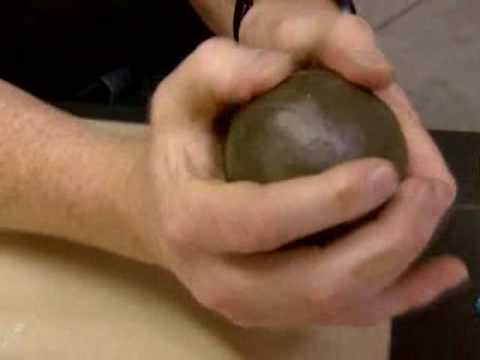
I have no idea what possessed them to try this. After all, these were big TV stars who could test anything…why assault their olfactory senses with this myth? Who knows? Anyway, they discovered something I’m sure will be useful knowledge somewhere. After hours of molding and polishing, they were actually able to get the turd ball to look like a brown, shiny pool ball.
Wow. And yuck.
Sure, there are times when you have no choice but to take what you have and make the best of it. Still, most of the time we spend fixing un-fixable mistakes would be better spent throwing away what we have and starting over. Though the Mythbusters proved you can polish a turd, you know what they say… “Don’t throw good money after bad.”
I meet with a group of men every Friday morning. These men are leaders…some of the “movers and shakers” in our community. (If you must know, I invited myself!) I love hearing the hearts of these men…their dreams and hopes and aspirations. I haven’t been involved with them for very long, but the time has became sacred to me.
Last week, the leader of the group asked us to share the time in our lives when we experienced the most freedom. My mind went into hyper-speed. Even with all my synapses firing, desperately seeking even a faint memory of a moment of freedom, I came up empty. It’s not that I feel bound up, it’s just that the pace of my life is so intense that I rarely feel free.
But then I remembered.
It was in my moment of greatest trial that I actually felt the greatest sense of freedom. My oldest son had been diagnosed with cancer, and after spending several weeks deciding on the treatment path, my “part” was completed. I had come to the end of myself and clearly recognized that I could no longer control anything really important. There was nothing more I could do, other than perhaps the most important thing – pray.
I was free.
As the men in that Starbucks shared around our table, each shared a similar exprerience. In their moment of greatest need, of greatest dependence, these world-changing men found freedom.
Funny, isn’t it? We spend our lives running from anything associated with pain, but it’s in pain that we find our greatest freedom and growth. Perhaps James was right when he told us to “consider it pure joy” when we encounter trials.
I have a 15 year-old who recently embarked on a journey sure to terrify any parent…the journey to getting a driver’s license. Sure, I’m excited for him, but I also remember my dad’s words to me when we went to practice driving for the very first time: “Drive like every other b*****d on the road is trying to kill you.”
Um….ok.
My dad didn’t use that language every day, so it made an impression on me, and I remembered it!
What I also remember is my first official driving lesson with my instructor. He sat in the driver’s seat, started down the road, then told me that he wouldn’t move the steering wheel off-center unless I told him to.
Within 5 seconds we were headed into oncoming traffic.
“Right!”, I screamed.
He moved the wheel to the right.
“Left!”, I shouted.
Left we went.
“A little right…a little left…a little right…..left….right…”
After 15 minutes I was completely exhausted. I had nothing left. At that point, he stopped the car, and explained to me that driving wasn’t just setting the car in motion in a certain direction. It was setting the car in motion toward a specific target, then making a series of adjustments based on road conditions, direction, traffic and unexpected events that surface as you drive. It was a dynamic, not static.
As leaders, we are often asked to set our teams in motion toward a specific target. To be certain, we need goals and targets to accomplish anything! At the same time, we’d be wise to remind ourselves, and our teams, that our ultimate success will depend on our ability to make the micro, and even macro adjustments necessary to reach our destination safely and effectively.
As I’ll soon remind my son, “There are plenty of drivers out there not paying attention…don’t be one of them!”
Fill them with water and you have a weapon. Fill them with helium and you have an aircraft. Rub them on your head and you have a science experiment…or at least hair that stands on end!
Balloons are incredibly versatile, and generally easy to control. Fill one up with air, and no matter how hard you hit it, it’s easy to keep right in front of you. You can easily walk down a hallway bouncing a balloon between hands. Even if you bounce it a little to the left or right, you can make mid-course corrections with ease….the balloon just never gets very far from you.
Golf balls are decidedly less versatile. There are probably uses for them outside of golf, but in general, they are what they are…hard, white spheres meant to be hit with authority to a great distance. Somewhere on the box of golf balls you’ll probably see the word “control”, but anyone who plays the game knows this is a lie.
Some people I work with are like balloons. While they may be colorful and amusing, they generally stay pretty close. No matter how hard I try, they rarely get far from me….even if I want them to. When I set them off on a task, they are generally easy to reorient if they get slightly off to the side.
Others I work with are like golf balls. When I set them off on a task, I may never see them again. When I play golf, my ball often looks pretty good coming off the club face, but just as often I soon realize that a shot hit 1/16th of an inch offline at impact may end up in the woods or out of bounds when it stops rolling. So it is with these people.
Leading well requires that I know my people. Some need constant direction, and others need very clear direction at the start. It’s probably not a big deal when I’m leading balloons, but when I’m leading golf balls, I’d be wise to make sure I am skillfully setting them in the proper direction and trajectory to get the most out of their gifts, abilities and time. Doing so will keep me from losing them and having to find yet another new one.
I was joining a new team, and I anticipated being considered for a leadership role. The call informed me that a younger, less seasoned teammate was being tapped for the job.
I was stunned.
After all, I had far more work experience, leadership experience and felt confident that I was a better “natural leader.” All that may have been true, but for the record, I think the decision makers made the right call. I wasn’t ready, because I wrongly equated position with leadership.
A couple years later, the “big boss,” the man responsible for that leadership decision, pulled me aside for a little chat. He started talking with me about some problems he saw with the team, and was suggesting ways I could help the group be more effective.
Externally, I was calm, but internally, I was indignant. I finally looked at him and said, “Aren’t you talking to the wrong guy? Remember, you hired the OTHER guy to lead, not me!” His response was classic. “I am talking with the right guy, because in this case, you’re the guy that can institute change!”
Message sent, message received.
I learned that a title on a business card has very little to do with leadership. I learned that leading “from the middle” is a great way to hone both a reputation for leading and the actual experience to take on more leadership. And most importantly, I learned, as my friend Craig Parker once said, that “leaders aren’t necessarily in charge, they’re in front!”
Last summer, my son and I took the opportunity to enjoy a beautiful day on the golf course. Our twosome was joined by 2 40-something African American men. Both were the size of professional athletes and, to my shame, I naturally fell into that stereotypical assumption. As I began to ask some questions, however, it was obvious that I was in WAY over my head.
Both men were scientists that had turned their brains into successful careers in business. I was amazed by their obvious skill and drive. I’m not always the sharpest knife in the drawer, but I realized this was a moment where I could parlay this acquaintance into a life lesson for my son. I asked these guys, “What advice would you give a 14 year-old to set him on the road to success?”
“Learn to communicate effectively! Debate team, speech class…whatever it takes. LEARN HOW TO COMMUNICATE!”
Simple, yet profound.
We live in the era of texting language, horrible grammar and limited vocabulary. It seems to me that one communicating with style, substance and power IS the one-eyed man.
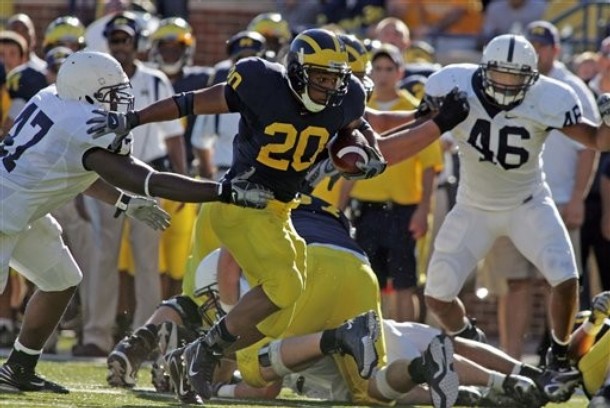
Much has been made of Randy Moss’ effort as a wide receiver for the New England Patriots last weekend. Moss has long been known as a mercurial star….at one moment looking like an intense, focused Hall-of-Famer, the next appearing to be disinterested, lazy and even pouty. As I thought about how Moss reacted to his reduced role in New England’s offense, I was reminded of an interaction I had with my dad many years ago.
My dad is a singer/actor, and for years worked at an amazing dinner theater in Minneapolis. He had starring roles, minor roles, and even chorus roles. It was always a treat for me to go to the theater to see his shows. The pageantry, the music, the acting, the great dinners…I loved it.
It wasn’t always great for my dad.
While there were many shows he enjoyed, he often got stuck doing shows he genuinely disliked. When you’re killing yourself doing 8 performances a week for 6 months and you despise the content? Yikes. The conversation I had with him after watching one of his shows changed my life.
I went to the theater this particular evening with one thought…I was going to watch my dad throughout the entire show. He was in the chorus this time, so the focus was rarely on him. The musical had been running for several months, and my dad hated it.
From the opening overture to the closing curtain, I watched my dad. Never, and I mean never, did he lose one ounce of focus. He was always in character, always engaged. His energy and effort couldn’t have been more concentrated had he been the lead in a Broadway musical. I was dumbfounded.
After the show, I asked him how he mustered the emotional energy to deliver such a terrific performance despite his seemingly insignificant role in a production he had come to despise.
“Christopher, I am a professional.”
That comment brings tears to my eyes as I write it.
Thanks for being my living example, Dad. In an age of entitlement and narcissism, we’ve forgotten what you guys look like.